
How to Choose Night-Play Pickleball Equipment That Won’t Quit
A practical buyer framework for picking LED paddles, light-up balls, and net lights that stay bright, charge easily, and survive real play.
Start With Visibility That Lasts a Full Session (Not a Demo)
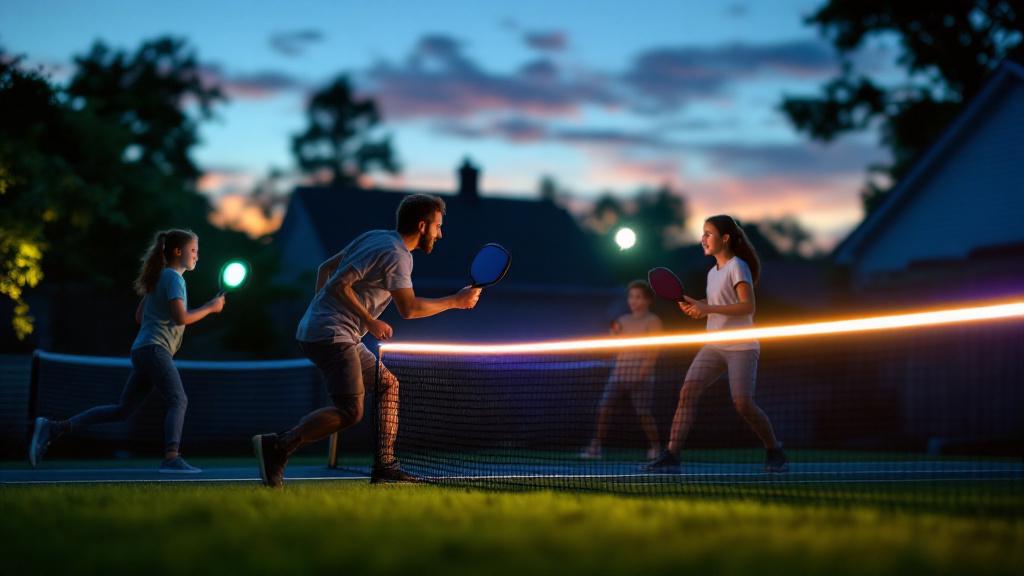
Night play fails for one reason more than any other: the gear gets dim halfway through game two. When evaluating pickleball accessories like LED paddles and light-up balls, treat battery-life claims as marketing until you translate them into your reality—temperature, brightness mode, and rally length all matter. Look for clear runtimes at specific settings (e.g., “high mode for 90 minutes”), and prioritize products with consistent brightness instead of a slow fade that makes tracking tougher each point.
Also assess visibility angles. A ball that looks bright in your hand may disappear in flight if the light module is blocked or uneven. For paddles, internal illumination should outline the face and edges without creating glare for your partner. For net lighting, a continuous line beats scattered points—your eyes use that boundary to judge height and depth at speed. If you can’t see ball, paddle, and net simultaneously, the setup won’t feel like real pickleball.
Audit the Power Plan: Charging Routines, Swaps, and Setup Time
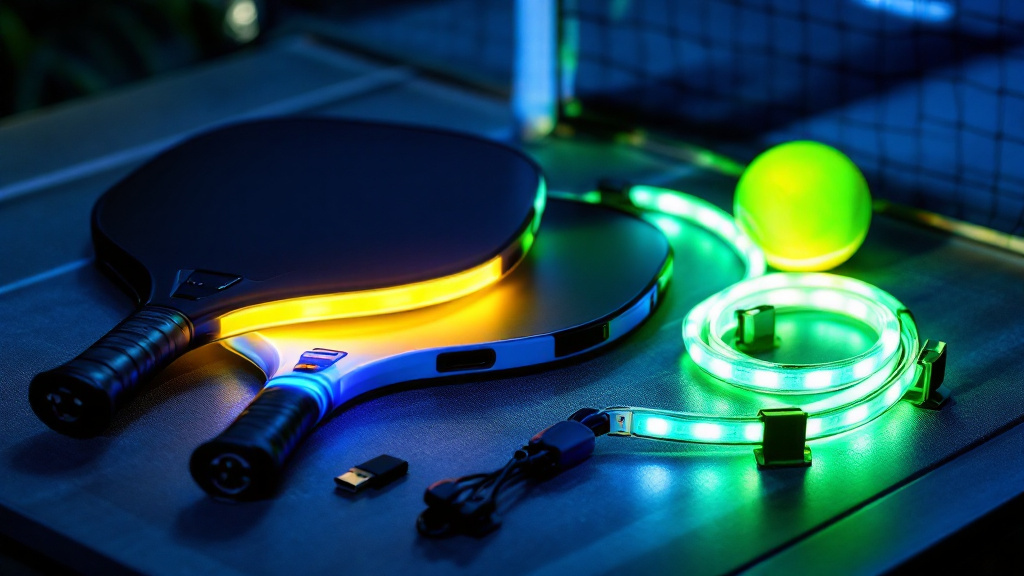
A night-play kit is only “convenient” if your charging routines fit your weeknight rhythm. Favor USB‑C charging across everything—paddles, net strip, and any ball tools—so you’re not hunting for three cable types at 7 p.m. Check whether paddles charge as a pair (dual dock or two ports), how long a full charge takes, and whether you can top up quickly between games. The best systems make it obvious: indicator LEDs, predictable runtimes, and no fragile battery doors.
For light-up balls, avoid designs that require constant re-tightening or battery swaps courtside. Key-activated or sealed modules reduce fiddling and help maintain consistent brightness. Finally, time your setup: a clip-on net light should attach in under a minute and stay taut without sagging. If the workflow feels like a science project—tape, loose clips, or frequent resets—your “after hours” session will quietly become a one-time novelty.
Buy for Real Play: Durability, Weather Resistance, and On-Court Ergonomics
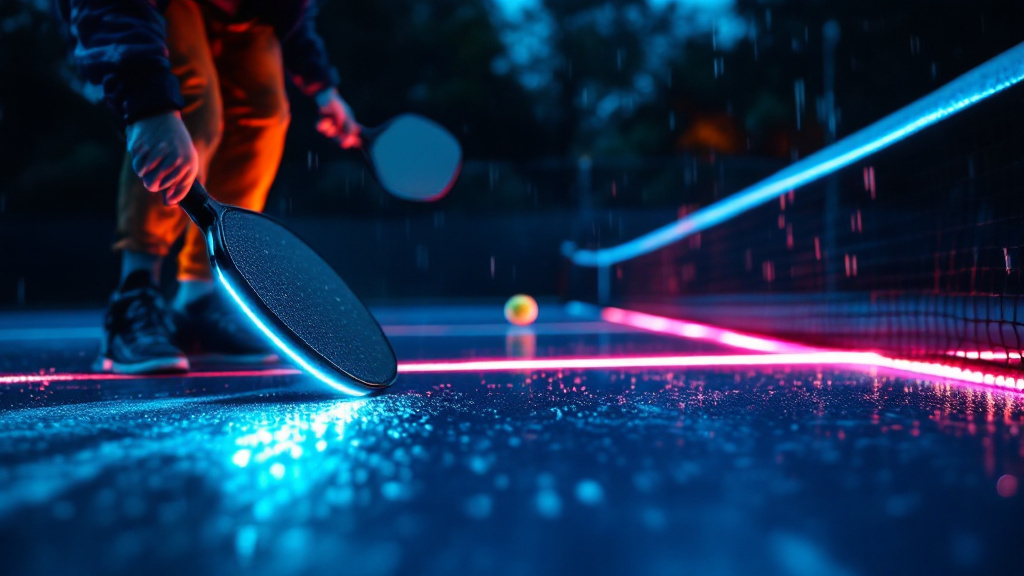
Night equipment has to survive the same punishment as daytime gear—plus moisture, cold, and repeated impacts. For durability, inspect the weak points: paddle seams, lens covers, switches, and charging ports. Look for solid construction that keeps lighting internal and protected, with ports that seal well and switches that won’t trigger accidentally in a bag. For net strips, demand strong clips and a housing that won’t crack when folded or stepped on.
Weather resistance is the difference between “sometimes” and “all winter.” Even if you don’t play in rain, dew and damp courts are common. Choose materials that handle splashes and temperature swings without flicker. Lastly, ergonomics decides whether you’ll keep using it: LED paddles should preserve familiar weight, balance, and grip texture; lighting should enhance tracking without distracting glare. The right pickleball accessories make night sessions feel normal—just longer—so you can play after work without installing permanent lights.